City hero image

Taiyuan

China's Dragon City with 2,500 years of history - birthplace of emperors, home to ancient Jinci Temple, and the culinary heart of Shanxi's legendary noodle culture.

About

Taiyuan, the Dragon City, carries 2,500 years of continuous urban history. Nine dynasties made this basin their capital, and emperors including the Tang Dynasty's Li Shimin launched their campaigns from these mountains. The city's very name evokes power - Taiyuan means Great Plain, and its geography between three ranges created a natural fortress.

The crown jewel is Jinci Temple, China's earliest surviving royal sacrificial garden. Walking among its ancient cypress trees and Song Dynasty halls, visitors encounter architecture unchanged for a millennium. The Saint Mother Hall with its painted sculptures, the Flying Beam across Fish Pond - these are not ruins but living heritage.

Shanxi is China's noodle heartland, and Taiyuan its showcase. The city's noodle masters perform daily feats of culinary artistry - shaving dough into boiling water with blade precision, flicking batter into irregular shapes, rolling oat flour into intricate spirals. Each technique produces noodles with distinct textures that pair with rich meat sauces or simple vinegar-garlic dressings.

For centuries, Taiyuan was known as China's Coal Capital. The surrounding mountains held vast deposits that powered industrialization. Today, the city writes a new chapter. Coal mines close, steel mills modernize, and the once-polluted Fen River now anchors a 33-kilometer park system. The China Coal Museum offers visitors a chance to experience a simulated descent into the mines that once defined this region.

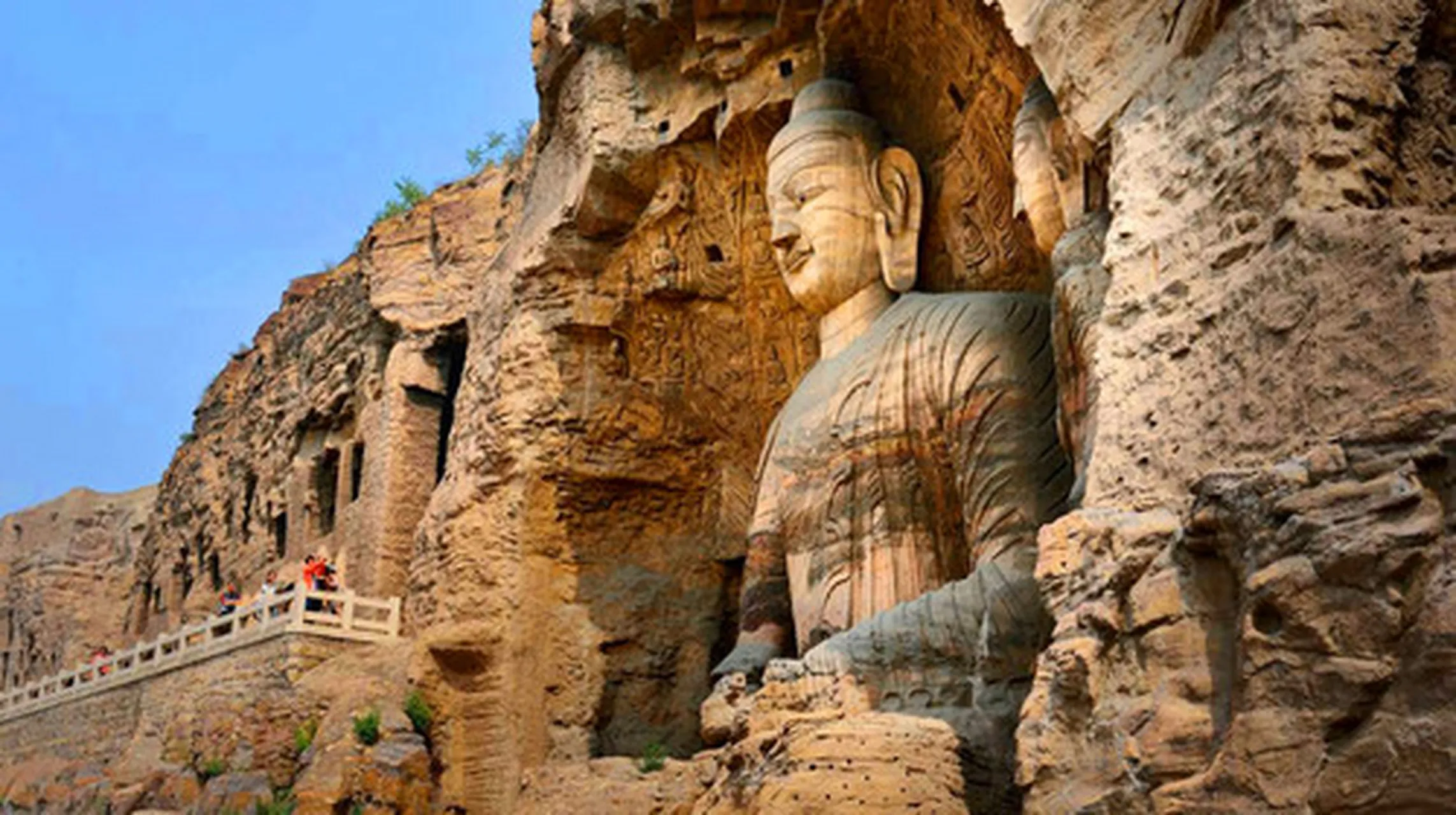
The surrounding landscape offers escapes. Mengshan's 66-meter Buddha, carved 1,500 years ago, gazes serenely over the valley. Tianlongshan's cave temples hide sculptures from the golden age of Chinese Buddhism. An hour's drive reaches Pingyao's Ming Dynasty streets and Qiao Family Courtyard's architectural splendors.

Taiyuan moves at a measured pace compared to China's coastal metropolises. Morning tai chi in Fenhe Park, afternoon temple visits, evening noodle dinners - this is the local rhythm. The city welcomes travelers seeking China's deeper history beyond the tourist crowds.

👥
Population 5.39 million
📐
Area 6,909 km²
💬
Language Mandarin Chinese, Jin dialect. English spoken in hotels and tourist areas.

History & Development

Taiyuan's recorded history begins in 497 BC when it was established as Jinyang, capital of the Jin state during the Spring and Autumn Period. The city's strategic basin location made it a prize for competing kingdoms.

The Tang Dynasty (618-907) marked Taiyuan's golden age. Designated the Northern Capital (Beidu), it ranked alongside Chang'an and Luoyang. Emperor Li Shimin launched his founding campaign from here, earning the city its Dragon City name.

The Five Dynasties period saw Taiyuan serve as capital for three successive regimes. The Northern Han made it their last stronghold before falling to Song forces in 979 AD.

The Song conquest proved devastating. Emperor Taizong, believing the city's geography bred rebellions, ordered Jinyang burned and flooded. Taiyuan was rebuilt on a new site in 982, but never regained its Tang-era prominence.

Ming and Qing dynasties brought commercial prosperity. Shanxi merchants became China's most powerful trading class, establishing banking networks across the empire. Beautiful courtyard architecture from this era survives in the old city.

The 20th century brought industrialization. Japanese occupation developed coal mines, and after 1949, the new government expanded heavy industry. Taiyuan became a major energy base but gained notoriety for air pollution.

Since 2000, environmental transformation has been the priority. Coal mines closed, steel mills modernized, and green spaces expanded. The Fenhe River, once industrial runoff, now anchors an award-winning park system. High-speed rail and a new metro connect Taiyuan to China's modern network.

Economy & Industries

Taiyuan's economy is transitioning from its coal-dependent past toward diversified, sustainable industries.

Energy remains important but is evolving. Traditional coal mining continues with stricter environmental standards, while new energy sectors - solar manufacturing, wind power equipment, clean coal technology - are growing. The city aims to model China's energy transition.

Manufacturing has diversified beyond steel. Taiyuan produces components for China's high-speed rail network and exports equipment globally. New materials, electronics, and rail transit equipment are priority sectors.

Services are expanding fastest. Tourism benefits from Shanxi's heritage concentration - Jinci Temple, Twin Pagodas, and surrounding ancient sites attract growing visitor numbers. Modern finance and logistics rebuild Shanxi's historic merchant tradition.

Agriculture in surrounding counties focuses on minor grains - millet, oats, buckwheat - that have gained premium market appeal as health foods. Shanxi vineyards produce increasingly respected wines.

Taiyuan's GDP reached 557.6 billion yuan in 2023. Development strategy emphasizes innovation-driven, green transformation - moving up value chains while reducing environmental impact. The national-level Shanxi Transformation Demonstration Zone anchors this transition.

Top Attractions

🏛️ Landmark

Jinci Temple

China's earliest surviving royal sacrificial garden, featuring Song Dynasty architecture including the Saint Mother Hall and Flying Beam across Fish Pond. Ancient cypress trees and the perpetual Nanlao Spring add natural wonder.

★★★★ 4.7
🕐 8:30 AM-5:30 PM
🎫 ¥80
🏛️ Landmark

Twin Pagoda Temple

Taiyuan's iconic landmark featuring two 13-story Ming Dynasty brick pagodas rising 54 meters. The temple complex includes ancient peony gardens and Ming Dynasty architecture.

★★★★ 4.4
🕐 8:30 AM-5:00 PM
🎫 ¥30
🎭 Museum

Shanxi Museum

National first-class museum housing 500,000 artifacts showcasing Shanxi's 5,000-year history. Highlights include Jin Dynasty bronzes, Northern Dynasty murals, and Buddhist sculptures.

★★★★ 4.8
🕐 Tue-Sun 9:00 AM-5:00 PM
🎫 Free
🏛️ Landmark

Mengshan Giant Buddha

One of the world's earliest large stone Buddha statues, carved in 551 AD. At 66 meters tall, it predates the Leshan Giant Buddha by 160 years. Recently restored after centuries of damage.

★★★★ 4.5
🕐 8:00 AM-6:00 PM
🎫 ¥70
🌳 Park

Fenhe Park

A 33-kilometer linear park along the Fen River featuring walking paths, bike lanes, and wetland ecosystems. The rejuvenated riverfront is Taiyuan's green lung and recreational heart.

★★★★ 4.5
🕐 24/7
🎫 Free
🏛️ Landmark

Tianlongshan Grottoes

Buddhist cave temples from Eastern Wei to Tang Dynasty (534-907 AD). Famous for elegant sculptures, though many were damaged or looted. The mountaintop setting offers panoramic views.

★★★★ 4.3
🕐 8:30 AM-5:00 PM
🎫 ¥50
🎭 Museum

China Coal Museum

China's only national coal museum featuring a simulated underground coal mine experience. Learn about coal formation, mining history, and China's energy transition.

★★★★ 4.4
🕐 9:00 AM-5:00 PM
🎫 ¥60

Food & Culture

Discover the culinary treasures of Taiyuan, from traditional street food to imperial cuisine.

Things to Do

🏛️

Jinci Temple Exploration

Discover ancient Song Dynasty architecture and the legendary Nanlao Spring.

🍴

Noodle Culture Tour

Watch masters shave noodles with blades and taste authentic Shanxi cuisine.

Coal Mine Experience

Descend into a simulated coal mine and learn about China's energy history.

Fenhe River Cycling

Ride along the 33km riverside park and enjoy Taiyuan's green transformation.

Getting Around

✈️

Airport

Taiyuan Wusu International Airport (TYN) - 18 km from city center

🚄

High-Speed Rail

Connected to major cities

🚇

Metro

Public transportation available

🚌

Bus Network

Extensive network throughout the city

🚕

Taxi & Rideshare

Available throughout the city

Best Time to Visit

🌸

Spring

Apr - May

★★★★★

Pleasant temperatures and blooming flowers. Ideal for temple visits and city exploration.

  • Comfortable weather
  • Flower season
  • Temple visits
☀️

Summer

Jun - Aug

★★★☆☆

Hot but mountain areas like Mengshan offer cooler escapes. Indoor museums are good options.

  • Mountain escapes
  • Museums
  • Summer fruits
🍂

Autumn

Sep - Oct

★★★★★

Cool and crisp with clear skies - the best season for hiking and outdoor activities.

  • Best weather
  • Hiking season
  • Harvest festivals
❄️

Winter

Nov - Mar

★★★☆☆

Cold and dry, but experience traditional northern Chinese winter culture and warm noodle soups.

  • Winter culture
  • Hot noodles
  • Fewer tourists

🎉 Festivals & Events

Lunar July 2
Jinci Temple Fair

Traditional temple fair with folk performances, local crafts, and Shanxi snacks.

September
Taiyuan International Marathon

Annual marathon event through the city and along Fenhe River.

💡 Weather Tips

Spring and autumn are ideal. Bring warm clothes for temple visits in winter.

Travel Reminders

☀️

sightseeing

Visit Jinci Temple in the morning to avoid crowds and have more time to explore.

💡

food

Try knife-shaved noodles at traditional shops like Qingheyuan for authentic taste.

💡

sightseeing

Wear flat shoes for the underground mine simulation at the Coal Museum.

💡

sightseeing

Pingyao Ancient City and Qiao Family Courtyard are 1 hour away, perfect for day trips.

Continue Exploring China

Discover more cities, food guides, and travel inspiration.