City hero image

Xuzhou

Home of XCMG—one of the world's top three construction machinery makers and a strategic transport hub across five provinces.

About

Xuzhou, occupying the strategic crossroads where Jiangsu meets Shandong, Henan, and Anhui provinces, has been a military and transport nerve center for over 4,000 years. The city's location at the intersection of the Beijing-Shanghai high-speed railway corridor and the Longhai railway line makes it one of China's most important inland transport hubs.

The city is best known internationally as the headquarters of XCMG (Xuzhou Construction Machinery Group), one of the world's top three construction equipment manufacturers. XCMG's massive yellow cranes, excavators, and road rollers are a common sight across the city and exported to over 180 countries. This industrial strength anchors an economy deeply rooted in heavy machinery, energy, and logistics.

Xuzhou's historical significance is equally impressive. It was the birthplace of Liu Bang, founder of the Han Dynasty—China's golden age that gives the Han Chinese their name. The Han Terracotta Warriors, a 2,000-strong miniature army discovered in 1984, and the Guishan Han Tomb are among the finest Han Dynasty archaeological sites in China.

History & Development

Xuzhou's recorded history spans over 4,000 years, making it one of the oldest continuously inhabited cities in China. During the Xia and Shang dynasties, the region was known as Pengcheng, a key vassal state.

The most pivotal moment in Xuzhou's history came in 209 BC, when Liu Bang, a local official from nearby Pei County, raised an army against the Qin Dynasty. Liu Bang went on to found the Han Dynasty (206 BC-220 AD), one of the greatest empires in Chinese history. Xuzhou became the capital of the Chu Kingdom, a semi-autonomous Han fiefdom, and a center of political power.

Throughout imperial history, Xuzhou's strategic position made it the most fought-over city in China. Over 200 major battles have been recorded here, earning it the nickname "the city of 200 battles." Control of Xuzhou meant control of the Grand Canal and the north-south transport corridor.

In the modern era, Xuzhou was the site of the Huaihai Campaign (1948-1949), one of the largest and bloodiest battles of the Chinese Civil War, involving over 1.4 million soldiers. The city's reconstruction after 1949 focused on heavy industry, establishing the foundation for today's XCMG conglomerate.

Economy & Industries

Xuzhou's economy, with a GDP exceeding 800 billion yuan, is dominated by heavy industry, construction machinery manufacturing, energy production, and logistics.

The crown jewel is XCMG Group, headquartered in Xuzhou since 1943. XCMG is among the world's top three construction machinery manufacturers, competing with Caterpillar and Komatsu. The company produces over 300 product lines including cranes, excavators, loaders, road machinery, and fire-fighting equipment. XCMG employs over 200,000 people in Xuzhou and generates annual revenue exceeding 100 billion yuan. The company's export network covers 183 countries and regions.

Energy production is the second pillar. Xuzhou sits on rich coal reserves and hosts several large coal-fired power plants that supply electricity to the East China grid. The city is transitioning toward cleaner energy, with investments in photovoltaic manufacturing and smart grid technology.

Logistics is a natural advantage given Xuzhou's location at the intersection of five major railway lines and multiple expressways. The Xuzhou Comprehensive Bonded Zone and the Belt and Road logistics hub handle massive freight volumes connecting coastal ports with inland provinces.

Engineering, including mining equipment, heavy trucks, and industrial automation components, rounds out the industrial base. The Xuzhou High-Tech Industrial Development Zone hosts over 1,000 enterprises. Tourism, centered on Han Dynasty heritage and Yunlong Lake, adds growing value.

Top Attractions

🌳 Park

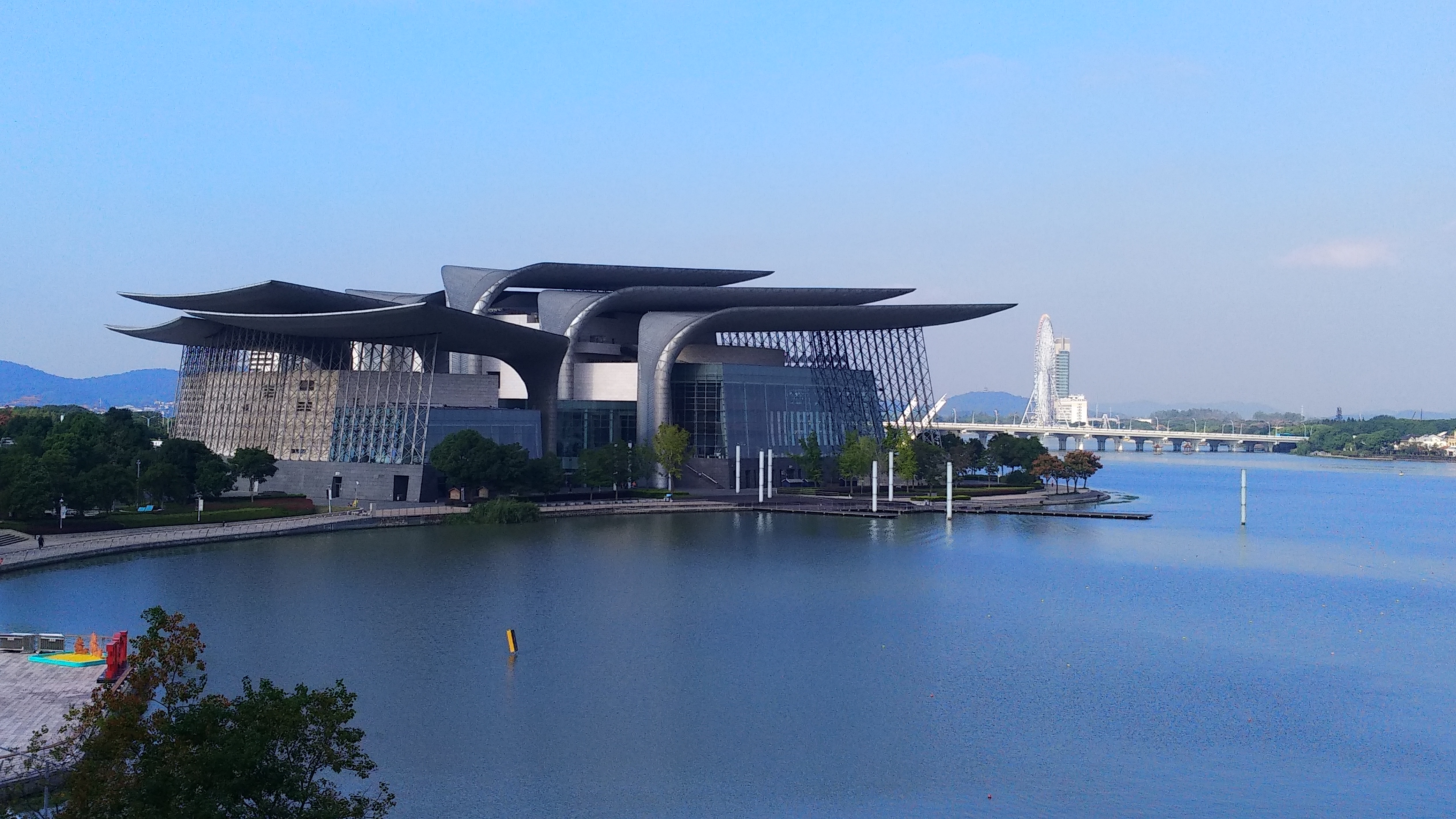
Yunlong Lake

Xuzhou's crown jewel—a 5.8-square-kilometer urban lake surrounded by rolling hills and willow trees. The lake offers boat rentals, a lakeside promenade, and the popular "Water Screen Movie" night show projected onto a fountain. The surrounding Yunlong Mountain provides hiking trails with panoramic city views. The lake area rivals Hangzhou's West Lake in beauty according to locals.

★★★★ 4.6
🕐 Open daily
🎫 Free
🎭 Museum

Han Dynasty Terracotta Warriors

Discovered in 1984, the Han Terracotta Warriors are a smaller but equally remarkable counterpart to Xi'an's Qin warriors. Over 2,000 miniature clay soldiers, horses, chariots, and musicians were buried in pits beside the tomb of a Han Dynasty prince. The figures are about one-third life-size, each with distinct facial features and military rank. The on-site museum provides excellent historical context.

★★★★ 4.7
🕐 8:30 AM-5:30 PM
🎫 ¥80
🎭 Museum

Guishan Han Tomb

The magnificent underground palace of Liu Zhu, the sixth King of Chu during the Western Han Dynasty. Carved entirely into Guishan (Turtle Mountain), the tomb features 15 interconnected chambers, including a complete bathroom with running water drainage—an engineering marvel for 2,000 years ago. The precision of the stone carving is extraordinary, with some walls polished to a mirror finish.

★★★★ 4.5
🕐 8:00 AM-6:00 PM
🎫 ¥60
🎭 Museum

Xuzhou Museum

One of the best regional museums in China, housing over 10,000 artifacts from Xuzhou's 6,000-year history. The museum's collection of Han Dynasty jade burial suits is world-class—goldsmith-threaded jade armor used by Han royalty. Other highlights include exquisite bronze vessels, golden seals, and a comprehensive exhibition on the Chu State, whose kings ruled this region for centuries.

★★★★ 4.6
🕐 9:00 AM-5:00 PM (Closed Mondays)
🎫 Free
🏛️ Landmark

Hubu Mountain

A historic hill in the old city center, known for its well-preserved Ming and Qing Dynasty courtyard residences. For centuries, this was the wealthiest neighborhood in Xuzhou, home to merchants and officials. Today, the narrow lanes are lined with traditional snack stalls, antique shops, and teahouses. The former residences of wealthy families have been converted into museums showcasing elite life in imperial China.

★★★★ 4.3
🕐 Open daily
🎫 Free
🏔️ Nature

Yunlong Mountain

A 142-meter hill adjacent to Yunlong Lake, named for its dragon-like shape when viewed from afar. The mountain is dotted with historic sites including the Song Dynasty Fanghe Pavilion, a 950-year-old Guanyin statue carved into a cliff face, and the Xinghua Temple. The mountain offers the best panoramic views of Xuzhou and the lake. Sunrise hikes are a local tradition.

★★★★ 4.4
🕐 6:00 AM-6:00 PM
🎫 Free
🎭 Museum

Huaihai Battle Memorial

A monumental memorial complex commemorating the Huaihai Campaign (1948-1949), one of the three decisive battles of the Chinese Civil War. The complex includes a massive granite memorial tower, a comprehensive museum with weapons and dioramas, and a cemetery for fallen soldiers. The museum provides detailed historical context with multimedia exhibits, making it an important site for understanding modern Chinese history.

★★★★ 4.2
🕐 9:00 AM-5:00 PM (Closed Mondays)
🎫 Free

Food & Culture

Discover the culinary treasures of Xuzhou, from traditional street food to imperial cuisine.

Things to Do

🏛️

Han Dynasty Heritage Tour

Visit the Han Terracotta Warriors, Guishan Han Tomb, and Xuzhou Museum.

Yunlong Lake Leisure

Walk, cycle, or boat around the beautiful urban lake.

Climb Yunlong Mountain

Hike the historic mountain for panoramic city views.

🍴

BBQ Street Feast

Experience Xuzhou's legendary BBQ culture at night markets.

🏛️

Hubu Mountain Walk

Explore Ming-Qing architecture and snack stalls on historic lanes.

🏛️

XCMG Factory Tour

See the world's largest cranes being assembled (by appointment).

Getting Around

✈️

Airport

Xuzhou Guanyin Airport (45km)

🚄

High-Speed Rail

Xuzhou East Station (1.5h to Beijing, 1h to Nanjing, 3h to Shanghai)

🚇

Metro

Metro Lines 1, 2, and 3 covering the city center and suburbs

Best Time to Visit

🌸

Spring

Mar - May

★★★★★

Warm and pleasant. Peach and apricot blossoms around Yunlong Lake.

  • Spring blossoms
  • Comfortable weather
  • Outdoor dining
☀️

Summer

Jun - Aug

★★★☆☆

Hot and occasionally rainy. BBQ season at its peak.

  • BBQ season
  • Yunlong Lake evenings
  • Indoor museums
🍂

Autumn

Sep - Nov

★★★★★

Crisp air, golden foliage. Best season for sightseeing.

  • Perfect weather
  • Autumn colors
  • Best hiking conditions
❄️

Winter

Dec - Feb

★★☆☆☆

Cold and dry. Snow occasionally blankets the Han tombs dramatically.

  • Snow scenery
  • Hot soup season
  • Fewer tourists

Continue Exploring China

Discover more cities, food guides, and travel inspiration.