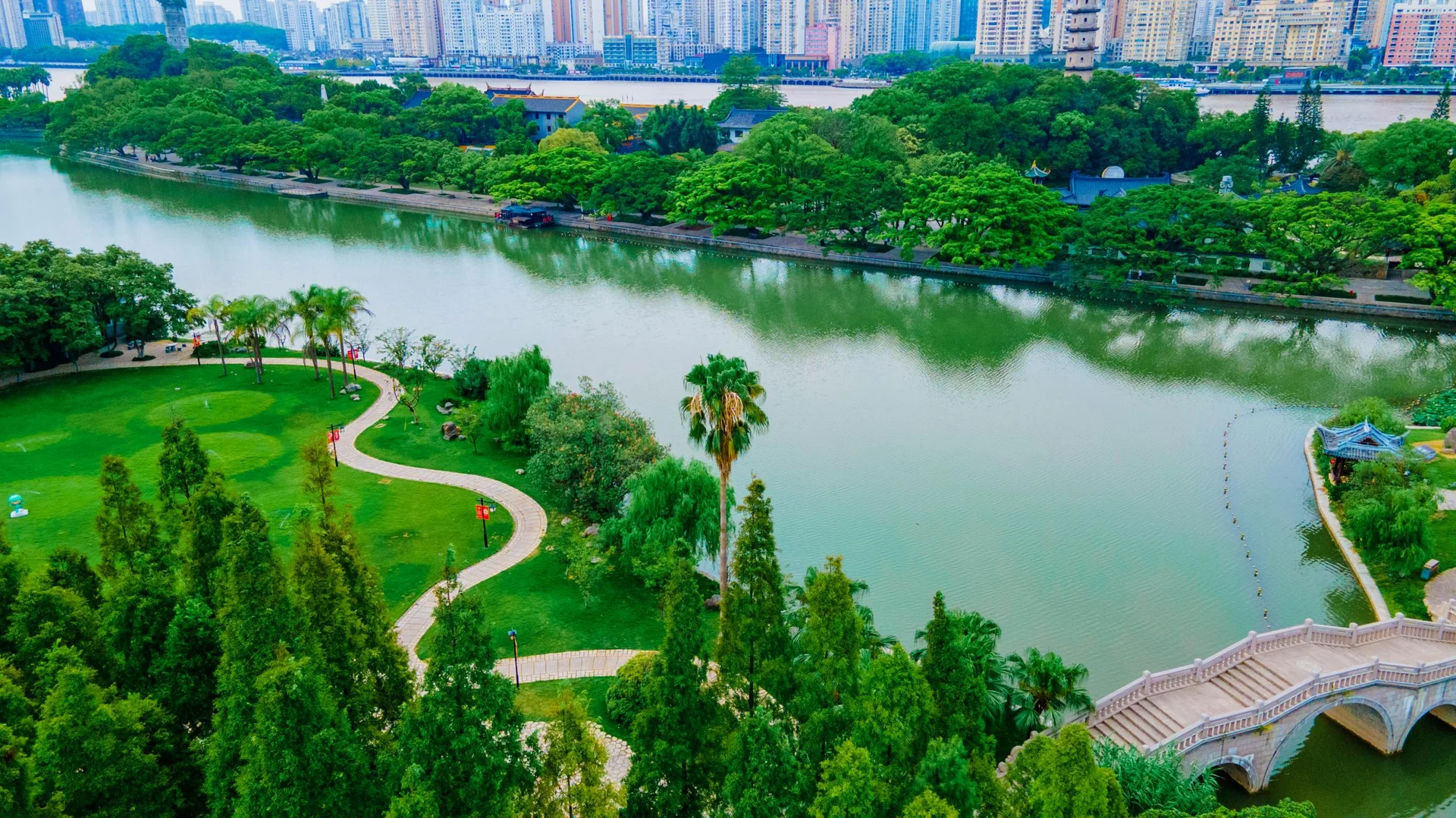
West Lake Scenic Area
UNESCO World Heritage Site and China's most famous lake. Ten scenic spots including Su Causeway, Leifeng Pagoda, and Three Pools Mirroring the Moon offer poetic landscapes that have inspired artists for centuries.
China's most beautiful city, where ancient West Lake meets modern innovation—a place of poetic landscapes, tea culture, and 5,000 years of civilization.
Hangzhou is a city where poetry comes alive. For over a thousand years, poets and emperors have praised West Lake's beauty—misty mornings on Su Causeway, lotus flowers in summer, moonlit pagodas reflected in still waters. But Hangzhou is not a museum piece; it's a living city where ancient culture meets cutting-edge innovation.
As the capital of Zhejiang province and one of China's seven ancient capitals, Hangzhou has serious historical weight. The Southern Song Dynasty (1127-1279) made it their capital, transforming it into a metropolis of a million people at a time when London was a small town. The Grand Canal connected it to Beijing, and silk and tea flowed to the world. Today, that entrepreneurial spirit lives on—Alibaba, the world's largest e-commerce company, was founded here, and Hangzhou ranks among China's most innovative cities.
With a GDP of 2.3 trillion yuan in 2025 and a population of 12.6 million, Hangzhou is a major economic center. But what sets it apart is quality of life. The city has consistently ranked among China's happiest cities, thanks to its blend of natural beauty, cultural depth, and modern convenience. West Lake's 10 scenic spots are all free to visit, public bikes cost almost nothing, and the food scene—from refined Hangzhou cuisine to street snacks like Cong Bao Hui—offers endless discoveries.
For travelers, Hangzhou offers a rare combination: world-class tourism infrastructure with an authentic, livable atmosphere. Spend mornings watching locals practice tai chi by the lake, afternoons sipping Dragon Well tea in hillside villages, and evenings exploring vibrant food streets. This is a city that invites you to slow down and savor—just as the Song Dynasty poets did.
Hangzhou's history spans over 5,000 years, beginning with the Liangzhu Culture (3300-2300 BC), considered one of China's earliest civilizations. Archaeological discoveries reveal sophisticated jade artifacts and an advanced water management system, earning Liangzhu UNESCO World Heritage status in 2019.
The city's recorded history began in 221 BC when Qin Dynasty established Qiantang County. The name "Hangzhou" first appeared in 589 AD during the Sui Dynasty, when Emperor Wen established the prefecture. The Grand Canal's completion in 610 AD connected Hangzhou to Beijing, transforming it into a major trading hub.
The Southern Song Dynasty (1127-1279) marked Hangzhou's golden age. After losing northern China to the Jin Dynasty, the Song court fled south and made Hangzhou their capital, renaming it Lin'an. The city swelled to over a million residents, becoming the world's most populous metropolis. Poets like Su Dongpo, who served as governor, left immortal verses about West Lake. Silk production, printing, and ceramics flourished.
After the Song fell to the Mongols in 1279, Marco Polo visited Hangzhou and called it "the finest and most splendid city in the world." Under the Yuan, Ming, and Qing dynasties, Hangzhou remained a prosperous commercial center, though never again the capital.
The 20th century brought dramatic changes. The city suffered during the Japanese occupation (1937-1945) but recovered after 1949. Economic reforms beginning in 1978 spurred development, and the establishment of Alibaba in 1999 launched Hangzhou's tech revolution. The 2016 G20 Summit showcased the city globally, and Hangzhou continues to balance heritage preservation with innovation.
Hangzhou's economy is among China's most dynamic, driven by digital technology, e-commerce, and advanced manufacturing. As one of China's 15 sub-provincial cities and the core of the Yangtze River Delta economic zone, Hangzhou serves as a critical innovation hub.
The city's digital economy accounts for over 25% of GDP, anchored by Alibaba Group and its ecosystem including Alipay, Taobao, and Cainiao logistics. Over 100 internet companies have made Hangzhou their home, earning it the nickname "China's Silicon Valley for E-commerce." The Hangzhou Future Sci-Tech City hosts thousands of startups in AI, big data, and fintech.
Traditional industries remain strong: Hangzhou is a national base for silk, tea, and pharmaceuticals. Advanced manufacturing includes automotive parts, machinery, and new energy. Tourism contributes significantly, with West Lake attracting over 100 million visitors annually.
Infrastructure investment has been massive. Hangzhou East Railway Station is one of Asia's largest high-speed rail hubs, and Hangzhou Xiaoshan International Airport connects to over 200 cities. The 2022 Asian Games accelerated urban development, including 12 new metro lines.
In 2025, Hangzhou's GDP reached approximately 2.3011 trillion yuan, with per capita GDP around 182,000 yuan (about 25,000 USD). The city ranks among China's top cities for business environment, innovation capacity, and quality of life.
Discover the culinary treasures of Hangzhou, from traditional street food to imperial cuisine.
Hangzhou Xiaoshan International Airport (HGH) - 27 km from city center
Connected to major cities
Public transportation available
Extensive network throughout the city
Available throughout the city
Mar - May
Perfect weather with blooming flowers and lotus buds. Ideal for West Lake walks and tea picking.
Jun - Aug
Hot and humid with lotus flowers in full bloom. West Lake evening walks are magical.
Sep - Nov
Cool, clear days with golden gingko and osmanthus fragrance. The best season overall.
Dec - Feb
Cold but rarely freezing. Snow on West Lake creates stunning winter scenes.
Discover more cities, food guides, and travel inspiration.